
We supply a range of axial cooling fans for electronic and industrial applications where reliable airflow is required to control heat and maintain system performance. Our range includes AC, DC and EC industrial fans from Cooltron, covering standard frame sizes, voltages and performance specifications. Suitable for use in power electronics, control systems, enclosures and thermally demanding environments.
All fans are available on a request for quote basis for both sample and volume supply, with consistent sourcing and technical support.
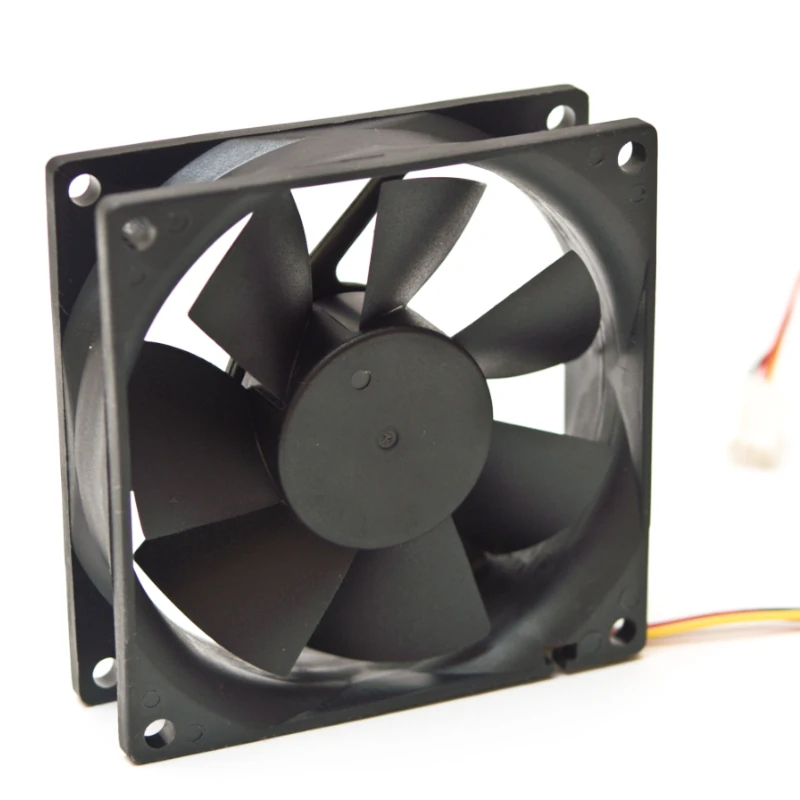
We supply three core fan types, selected based on power supply, control requirements and system design.
AC axial cooling fans operate from mains voltage and provide fixed airflow. Used where system simplicity and consistent cooling are required, particularly in control panels and industrial equipment.
DC cooling fans operate from low voltage DC and support PWM speed control and monitoring. Used where airflow needs to respond to changing thermal load, particularly in electronics cooling.
EC cooling fans combine AC input with brushless DC motor efficiency and variable speed control. Used in continuous duty systems where energy efficiency and control are important.
An axial cooling fan moves air parallel to its rotational axis using a rotating impeller. This creates directed airflow used to remove heat from components, heatsinks and enclosures. Axial fans deliver high airflow at low to moderate pressure, making them suitable for electronics cooling and industrial ventilation.
Selecting the correct cooling fan depends on system constraints, thermal load and control requirements.
Used in control cabinets and industrial equipment where consistent cooling is required.
Common in PCB level cooling, embedded systems and variable load applications.
Used in HVAC, refrigeration and high duty industrial systems.
Cooling fan selection should be based on measurable performance and operating conditions.
Specified in CFM or m³ per hour and should be matched to system heat load and required temperature rise.
Determines the ability to move air through resistance such as heatsinks, filters or enclosures.
Defines compatibility with system power supply and integration requirements.
Indicates protection against dust and moisture, important in industrial environments.
Measured in dB and relevant where acoustic performance or operator exposure is a factor.
Dual ball bearings offer longer service life and higher temperature tolerance. Sleeve bearings are suited to lower cost and lower temperature applications.
Cooling fans are used where passive cooling alone is not sufficient.
Cooling fans can be specified to meet application specific requirements.
Options include:
We support custom fan configurations with defined specifications and lead times.
Cooltron manufactures industrial cooling fans for electronics and industrial applications, with a focus on performance, reliability and consistency. We provide access to the full Cooltron range, with technical documentation, compliance support and consistent supply for both prototype and production requirements.
The difference between AC, DC and EC cooling fans comes down to power supply, control and efficiency. AC cooling fans run from mains voltage at fixed speed and are used in straightforward industrial applications. DC cooling fans operate from low voltage DC and support PWM speed control, making them suitable for electronics cooling and variable load systems. EC cooling fans combine AC input with brushless DC motor efficiency and variable control, offering improved energy efficiency in continuous operation.
An axial cooling fan moves air parallel to its rotational axis using a rotating impeller. As the blades rotate, they generate airflow that removes heat from components, heatsinks and enclosures. Axial fans are commonly used in electronics and industrial cooling where high airflow and low to moderate resistance are present.
The airflow required for an industrial cooling fan depends on system heat load, enclosure design and acceptable temperature rise. Airflow is typically measured in CFM or m³ per hour and should be matched to the heat that needs to be dissipated. Higher power systems or restricted airflow paths will require higher airflow and static pressure.
PWM fan speed control allows a DC cooling fan to adjust speed based on thermal demand using a pulse width modulation signal. This improves efficiency by increasing airflow when temperatures rise and reducing speed when cooling demand is lower. It is commonly used in electronics cooling and systems where noise and energy use need to be controlled.
The best bearing type for industrial cooling fans depends on operating conditions. Dual ball bearing fans are typically used in industrial applications as they offer longer service life and perform reliably at higher temperatures. Sleeve bearing fans are more cost effective but are better suited to lower temperature environments and shorter duty cycles.
IP rated industrial cooling fans are available for use in environments with dust, moisture or water exposure. Common ratings include IP54 and IP55. Specifying the correct IP rating helps maintain performance and reliability in harsh environments.
Custom industrial cooling fans can be specified to meet application requirements including voltage, connector type, speed control interface, airflow performance and IP rating. This is useful where standard fan configurations do not meet system constraints.
Choosing an industrial cooling fan supplier in the UK involves reviewing product range, technical support, compliance documentation and supply reliability. A suitable supplier should support both prototype and production requirements with consistent availability.
To request a quote, provide frame size, voltage, airflow requirement, bearing type and quantity. Based on this, suitable fan options can be recommended along with pricing and lead time.